




Climate change is no longer a distant threat; it is actively reshaping the way engineers, planners, and governments approach road infrastructure design. Rising temperatures, extreme precipitation events, flooding, and shifting freeze-thaw cycles are placing unprecedented stress on roads, bridges, and highways around the world. Understanding the climate change impact on road infrastructure design is now a critical priority for every transportation authority aiming to build roads that are safe, durable, and cost-efficient in the decades ahead.
Table of Contents
ToggleWhy Climate Change and Road Infrastructure Design Can No Longer Be Separated
Traditional road infrastructure design relied on historical climate data to determine load tolerances, drainage capacities, and material specifications. But with global temperatures rising and weather patterns becoming increasingly erratic, those historical benchmarks are no longer reliable. Engineers must now integrate climate projections into every phase of road design from initial site assessment to long-term maintenance planning.
According to global infrastructure studies, climate-related damage to road networks costs billions of dollars annually, and this figure is expected to rise significantly without proactive adaptation. The climate change impact on road infrastructure design is being felt across multiple dimensions: structural integrity, surface performance, drainage efficiency, and overall lifecycle costs.
Key Ways Climate Change Is Affecting Road Infrastructure
Here is how the climate change affects the road infrastructure:
1. Extreme Heat and Pavement Deterioration
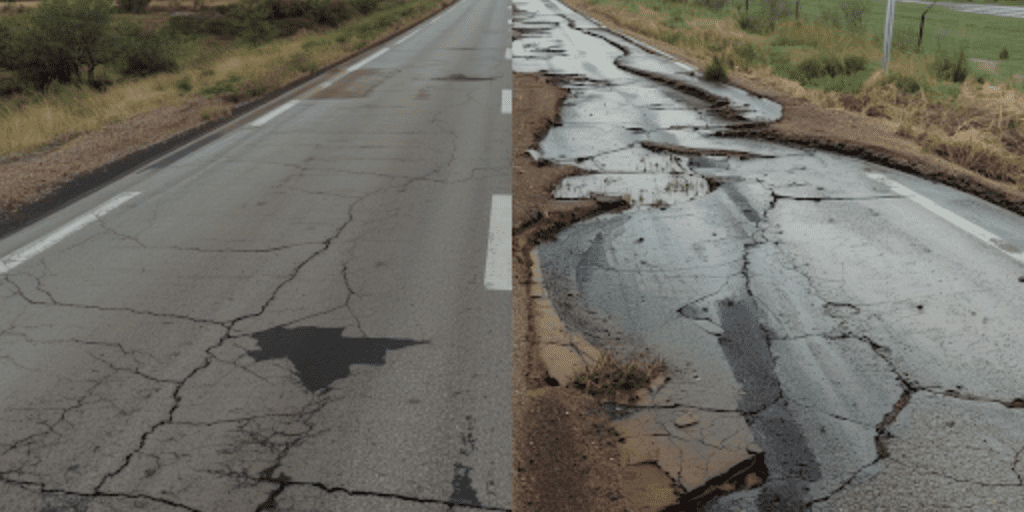
One of the most direct effects of climate change on road infrastructure design is the increasing frequency of extreme heat events. Asphalt pavement is particularly vulnerable to high temperatures, which cause rutting, softening, and surface deformation. In regions where summer temperatures regularly exceed historical averages, road surfaces are failing faster than expected, requiring more frequent and costly repairs.
Engineers are now turning to high-performance asphalt mixes, polymer-modified bitumen, and cool pavement technologies that reflect solar radiation to counteract heat-related deterioration. Designing roads with higher temperature tolerance thresholds is becoming a standard requirement in climate change-adapted road infrastructure design.
2. Flooding and Drainage System Failures
Increased rainfall intensity and flash flooding events are overwhelming road drainage systems designed for lower volumes of water. Poor drainage not only accelerates pavement failure but also creates dangerous driving conditions and can lead to complete road washouts. Flood-resistant road design incorporating wider culverts, elevated roadbeds, and permeable surfaces is increasingly essential in climate-resilient infrastructure planning.
Urban roads face a compounding problem: impermeable surfaces contribute to surface runoff, which combined with more intense storms, overwhelms stormwater systems. Green infrastructure solutions, such as bioswales, retention ponds, and permeable pavements, are being integrated into modern road design to manage this increased hydrological load.
3. Freeze-Thaw Cycles and Structural Damage
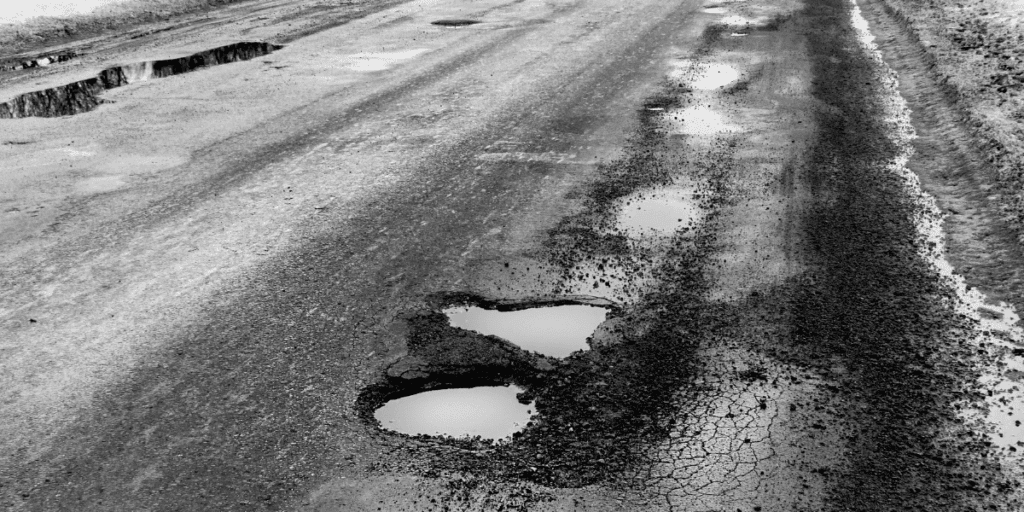
In cooler climates, climate change is altering traditional freeze-thaw cycles. While some regions are experiencing milder winters, others are seeing more erratic temperature swings that cause repeated freezing and thawing in a single season. This accelerates pavement cracking, pothole formation, and subgrade instability all of which significantly increase maintenance costs and reduce road lifespan.
Climate-adaptive road infrastructure design in cold-weather regions now accounts for more variable freeze-thaw scenarios, using improved sub-base drainage, frost-resistant materials, and thicker structural layers to prevent premature failure.
4. Sea-Level Rise and Coastal Road Vulnerability
Coastal road networks face an existential threat from sea-level rise and increased storm surge. Low-lying roads, causeways, and bridges are increasingly susceptible to inundation, saltwater intrusion, and erosion. The climate change impact on road infrastructure design in coastal zones requires a complete rethinking of alignment, elevation, and protective structures.
Infrastructure planners are now conducting coastal vulnerability assessments as a mandatory step before any new road project in affected areas. Raising road elevations, constructing sea walls, and using saltwater-resistant materials are among the key adaptation strategies being deployed.
Innovative Solutions in Climate-Resilient Road Infrastructure Design
The engineering community is rising to the challenge of climate change with a range of innovative design and material solutions. These approaches aim to extend road lifespans, reduce maintenance costs, and ensure safety under increasingly extreme conditions.
Recycled and sustainable materials are playing a growing role in climate-resilient road design. Reclaimed asphalt pavement (RAP), rubber-modified asphalt, and geopolymer concrete offer improved performance and a lower carbon footprint compared to conventional materials. Using locally sourced materials also reduces supply chain vulnerabilities and transportation emissions.
Smart road technologies, including embedded sensors that monitor pavement temperature, moisture, and structural health in real time, are enabling predictive maintenance. This data-driven approach allows transportation agencies to respond to climate-related stressors before they escalate into costly failures.
Modular road design is another emerging solution that allows sections of road to be quickly replaced when damaged by extreme weather events, reducing disruption and lifecycle costs. Combined with advanced drainage modeling using climate projection data, these innovations are transforming how engineers approach the challenge of climate change in road infrastructure design.
Policy and Planning: Building a Climate-Adaptive Road Network
Technical solutions alone are not enough. Addressing the climate change impact on road infrastructure design requires systemic changes in policy, procurement, and planning frameworks. Many national and regional transportation authorities are now incorporating climate risk assessments into their standard design guidelines and requiring climate resilience analyses as part of environmental impact studies.
International frameworks like the Paris Agreement and the UN Sustainable Development Goals are also driving investment in climate-resilient infrastructure. Multilateral development banks, including the World Bank and the Asian Development Bank, are conditioning infrastructure loans on the adoption of climate-adaptive design standards.
For road authorities and private developers, this shift represents both a challenge and an opportunity. Roads designed with climate resilience in mind not only perform better under stress they also attract more sustainable financing, reduce long-term operational costs, and contribute to national climate commitments.
The Economic Case for Climate-Adaptive Road Design
Investing in climate-resilient road infrastructure design is not just an environmental imperative, it makes strong economic sense. Studies consistently show that every dollar invested in resilient infrastructure generates multiple dollars in avoided damage costs. Roads that are designed to withstand climate extremes have longer service lives, lower maintenance requirements, and significantly reduced risk of catastrophic failure.
In contrast, building to outdated standards exposes governments and communities to enormous costs. Road damage from flooding, heatwaves, and freeze-thaw cycles is one of the leading drivers of infrastructure maintenance backlogs worldwide. Proactive climate adaptation in road design is far more cost-effective than reactive repair.
Furthermore, climate-resilient roads support economic productivity by reducing traffic disruptions, logistics delays, and supply chain vulnerabilities. For developing economies in particular, reliable road networks are foundational to growth making the climate change impact on road infrastructure design a development issue as much as an environmental one
Conclusion
The climate change impact on road infrastructure design is profound, multifaceted, and growing. From extreme heat warping asphalt to flooding washing out rural highways and sea-level rise threatening coastal networks, climate change is challenging every assumption that traditional road design was built upon. The good news is that the engineering community, policy-makers, and the private sector are responding with innovative solutions, adaptive materials, and smarter planning frameworks.
Building roads that are resilient to the climate of the future is not optional it is a strategic necessity. Transportation networks are the backbone of modern economies and communities. By integrating climate change adaptation into every stage of road infrastructure design, we can ensure that these vital assets remain safe, functional, and cost-effective for generations to come.
Frequently Asked Questions
Q1: How does climate change directly affect road infrastructure design?
Climate change affects road infrastructure design in several ways, including increased pavement deterioration due to extreme heat, flooding from intense rainfall overwhelming drainage systems, accelerated freeze-thaw damage in colder climates, and sea-level rise threatening coastal roads. Engineers must now use climate projections rather than historical data to design roads that can withstand future conditions.
Q2: What materials are used in climate-resilient road design?
Climate-resilient road design uses a range of advanced materials, including polymer-modified asphalt that resists high temperatures, permeable pavements that manage increased runoff, frost-resistant subbase aggregates, saltwater-resistant concrete for coastal roads, and recycled materials like reclaimed asphalt pavement (RAP) that offer improved durability and sustainability.
Q3: Why is drainage so important in climate-adaptive road infrastructure?
Drainage is critical because climate change is increasing rainfall intensity and the frequency of flash flooding events. Road drainage systems designed under older standards are often inadequate for modern precipitation levels. Poor drainage leads to pavement failure, subsidence, and road washouts. Upgraded drainage including wider culverts, bioswales, and retention ponds is a cornerstone of climate-adaptive road infrastructure design.
Q4: Are there international standards for climate-resilient road design?
Yes, several international organizations have developed guidelines and standards for climate-resilient road design. These include the World Road Association (PIARC), the World Bank’s Climate-Resilient Transport guidelines, and the AASHTO standards in the United States. Many national road authorities are also updating their design codes to incorporate climate risk assessments and adaptation requirements.
Q5: What is the long-term economic benefit of climate-adaptive road infrastructure?
The long-term economic benefits are substantial. Climate-adaptive road infrastructure has lower lifecycle costs due to reduced maintenance and repair needs, longer service life, and fewer climate-related disruptions. Research indicates that proactive climate adaptation in infrastructure can deliver a benefit-to-cost ratio of 4:1 or higher, making it one of the most cost-effective investments governments and developers can make in transportation networks.