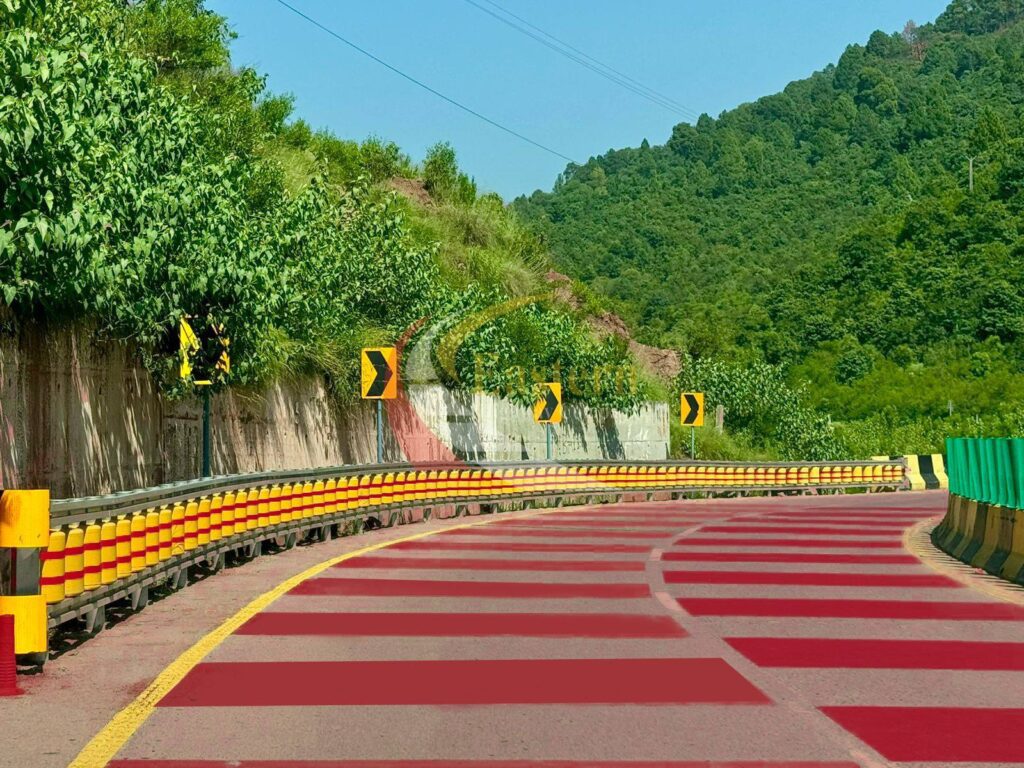





A roller barrier is used on road sections where impact management is critical. Sharp curves, steep slopes, medians, and high-speed corridors often require barriers that control collision energy rather than simply resist it.
Road safety research indicates that energy-absorbing roadside barriers can reduce severe crash outcomes by up to 30% in high-risk areas. This has led to the increased adoption of roller barrier guard rail systems in locations with higher collision probability.
A roller barrier absorbs impact and redirects the vehicle along the roadway. This reduces abrupt deceleration and helps maintain vehicle stability after contact.
Table of Contents
ToggleWhat is a Roller Barrier?
A roller barrier is a roadside safety barrier designed to manage vehicle impact on sections with elevated collision risk. It is typically installed along curves, bridge approaches, medians, and slopes. Unlike rigid guardrails, a roller barrier is engineered to absorb and distribute collision energy. Rotating rollers reduce the direct transfer of force to the vehicle and assist in guiding it back toward the traffic lane.
Roller Barrier Quadrail Systems
A roller barrier quadrail system is a roadside safety barrier that combines rotating rollers with a four-rail steel structure. It is designed for road sections where impact risk is high, such as sharp curves, steep slopes, and high-speed corridors. The quadrail structure provides added strength and containment compared to single or double rail barriers. The rotating rollers absorb collision energy and redirect the vehicle along the barrier line. At the same time, the quadrail frame helps keep the vehicle upright and within the roadway. This combination reduces impact force, limits vehicle damage, and improves overall safety during a collision.
Are Roller Barriers and Roller Barrier Quadrail Systems Different?
Yes, they are different in structure, but they serve the same safety purpose. A roller barrier refers to the general safety concept that uses rotating rollers to absorb impact and guide vehicles along the road. A roller barrier quadrail system is a specific design within this category. It uses a four-rail steel frame to provide additional strength and vehicle containment. This design is used in locations with higher impact risk, heavier traffic, or stricter safety requirements.
What are Roller Barriers Used for?
Roller barriers are used on road sections where vehicles are more likely to lose control. These include sharp curves, steep slopes, bridge approaches, and high-speed roads. Such locations need barriers that can manage impact instead of stopping vehicles abruptly. When a vehicle strikes a roller barrier, the rotating rollers absorb energy and guide the vehicle along the road. This helps reduce impact force, limit damage, and prevent vehicles from crossing into dangerous areas.
Components of a Roller Barrier
A roller barrier is built from several connected parts that work together to manage impact and guide vehicles safely. Each component plays a specific role in absorbing energy and maintaining structural stability.
Rotating Rollers
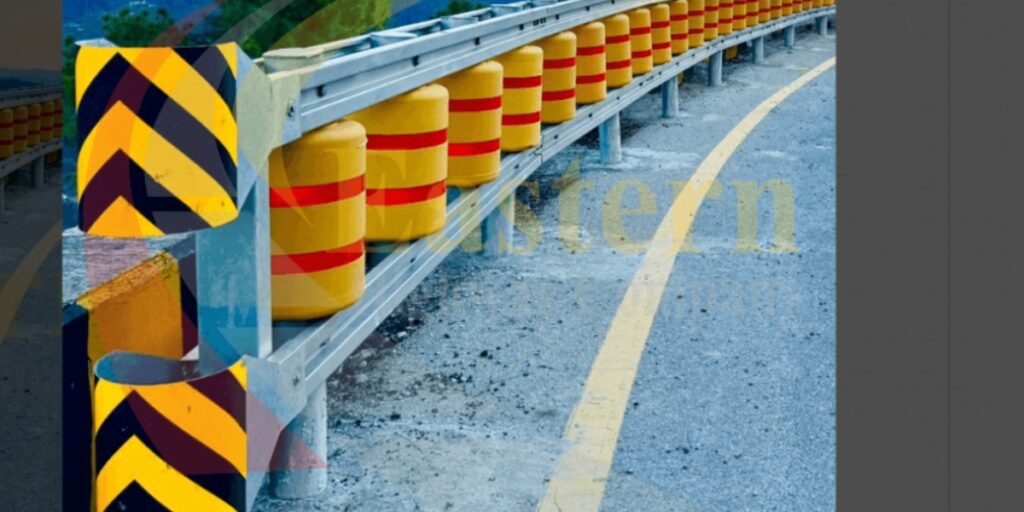
The rollers are the most visible part of the barrier. They are usually made from durable materials such as EVA or polyurethane. These rollers rotate during impact, which helps absorb collision energy and redirect the vehicle along the road instead of stopping it abruptly.
Steel Rails
Steel rails run horizontally through the barrier structure. They provide strength and help contain the vehicle within the roadway. The rails support the rollers and maintain alignment during impact.
Vertical Posts
Vertical posts are fixed into the ground to anchor the barrier. They provide stability and ensure the structure remains upright under pressure. Proper spacing of posts is important for maintaining overall strength.
Connecting Frames and Brackets
Frames and brackets hold the rollers and rails in position. These components keep the system aligned and allow the rotating mechanism to function correctly during a collision.
How Roller Barriers Work

A roller barrier works by managing impact energy instead of resisting it rigidly. When a vehicle collides with the barrier, the rotating rollers begin to spin. This rotation absorbs part of the collision force and reduces the intensity of the impact.
The spinning motion also guides the vehicle along the direction of the barrier. Instead of stopping abruptly, the vehicle is redirected back toward the roadway. This controlled movement lowers the risk of rollovers, secondary crashes, and severe vehicle damage.
At the same time, the steel rails and vertical posts provide structural support. They help maintain alignment and prevent the vehicle from crossing into dangerous areas. Together, these components allow the barrier to absorb, distribute, and redirect energy in a safer manner.
Roller Barrier vs Traditional Guardrail
Both roller barriers and traditional guardrails are used to protect vehicles from leaving the roadway. The difference lies in how they handle impact.
A traditional guardrail is usually made of steel beams fixed to vertical posts. Its primary function is containment. When a vehicle strikes it, the guardrail bends and absorbs some energy, but the impact force is still transferred quickly to the vehicle. This can result in sudden deceleration and higher damage.
A roller barrier works differently. It uses rotating rollers that absorb and redirect collision energy. Instead of stopping the vehicle abruptly, the rollers guide it along the road path. This reduces impact force and helps maintain vehicle stability after contact.
Traditional guardrails are widely used and cost-effective for many road sections. Roller barriers are often selected for high-risk areas such as sharp curves, steep slopes, and accident-prone zones where energy absorption and redirection are critical.
Both systems serve the same purpose, but the mechanisms and levels of impact control differ.
Standards & Testing in Pakistan
Road safety infrastructure in Pakistan follows national guidelines aligned with international benchmarks. Although specific standalone standards for roller barriers are not separately published, performance evaluation follows globally recognized crash-testing principles.
Barrier systems are assessed against criteria similar to those outlined in the Manual for Assessing Safety Hardware (MASH) and comparable frameworks. These evaluations measure impact performance, vehicle containment, and energy absorption under defined crash conditions.
Designers and contractors reference these standards to ensure that installed barriers meet expected safety performance requirements.
Final Words
Roller barriers are designed to manage impact in areas where road risk is higher. Their rotating mechanism allows energy absorption and vehicle redirection, which helps reduce crash severity. This makes them suitable for sharp curves, slopes, medians, and high-speed sections.
The effectiveness of a roller barrier depends on correct selection, proper installation, and compliance with safety standards. When applied in the right locations, roller barriers support controlled vehicle movement and contribute to safer road infrastructure.
FAQs
Where are roller barriers commonly installed?
They are installed on sharp curves, bridge approaches, highway medians, and accident-prone road sections. These locations require enhanced impact management.
What materials are used in roller barriers?
Roller barriers typically use EVA or polyurethane rollers with galvanized steel rails and posts. These materials provide durability and impact resistance.
Do roller barriers require crash testing?
Yes, roller barriers are evaluated under recognized crash-testing criteria. Performance is assessed based on impact speed, vehicle weight, and containment ability.
How long do roller barriers last?
Service life depends on traffic load and environmental conditions. Proper installation and maintenance extend durability.
Can roller barriers be installed on existing roads?
Yes, they can be installed on existing highways, medians, and bridge approaches. Installation depends on road geometry and anchoring conditions.
Are roller barriers suitable for high-speed roads?
They are commonly used on high-speed corridors and curves. Their energy-absorbing design helps manage impact severity.