



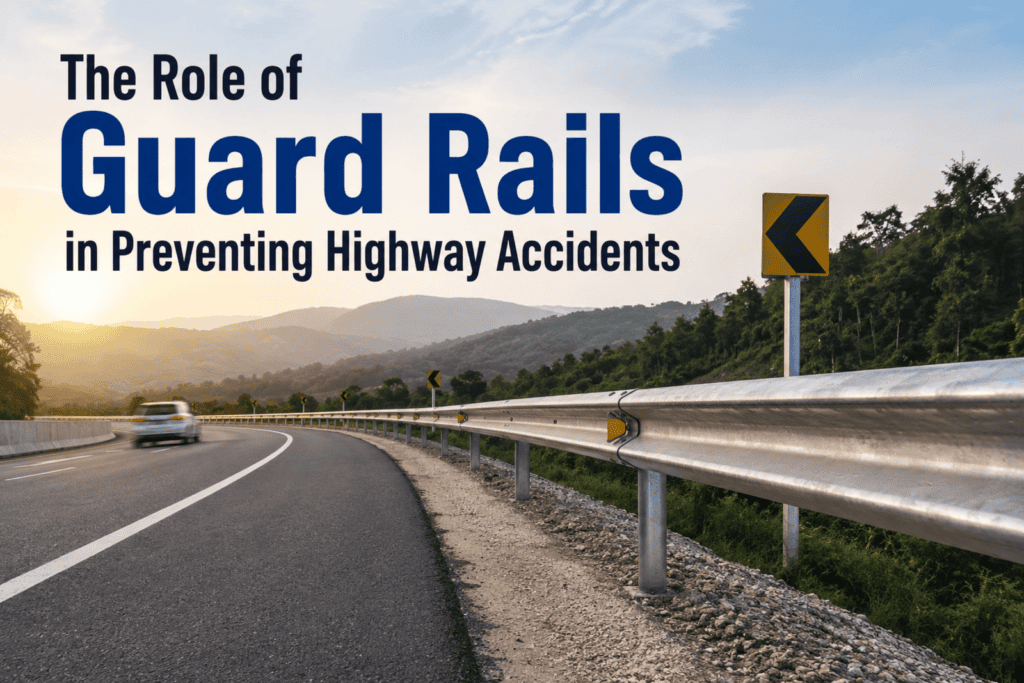
Highway travel becomes risky when a vehicle leaves its intended lane or runs off the road. Think of a steep slope, a bridge edge, large obstacles on the road, or an opposing traffic situation. A roadside barrier can provide an important layer of protection in such situations.
Guard rail systems highway safety is an important part of modern road design. A properly designed guard rail can redirect an errant vehicle and reduce the chance of a more severe collision. It can also shield drivers from hazards that cannot be safely removed from the roadside.
Pakistan has a wide network of motorways, highways, mountain roads, bridges, and high-speed routes. Many of these roads pass through challenging terrain. Guard rails can therefore play an important role in protecting road users at selected high-risk locations.
Table of Contents
ToggleWhat Is a Highway Guard Rail?
A guard rail is a roadside safety barrier that is mostly manufactured to protect vehicles when they leave the travelled way. It is normally placed between the road and a roadside hazard. The barrier does not simply act as a wall. Its components work together during an impact. These can include the rail, posts, connections, terminals, and anchoring system.
A common metal-beam guard rail is designed to deform and redirect an impacting vehicle. This can help keep the vehicle away from a steeper drop, fixed object, or other serious hazard. The exact performance depends on the system design, installation, vehicle, speed, and angle of impact.
That is why a guard rail should be treated as a complete safety system. The rail alone does not determine how well the barrier performs.
Why Are Guard Rails Important on Highways?
Highway vehicles often travel at higher speeds. A small loss of control can therefore have serious consequences.
A vehicle may leave the carriageway because of:
- Sudden lane changes
- Driver error
- Poor visibility
- Wet or slippery roads
- Mechanical failure
- Excessive speed
- Collision with another vehicle
- Sharp curves
- Unexpected roadside hazards
A clear roadside gives an errant vehicle more space to recover. Some locations, however, contain hazards that cannot simply be removed. A steep embankment is one example. A bridge structure is another. Trees, large utility poles, retaining walls, and other fixed objects can also create serious risks. Guard rails are used where shielding the hazard can provide a safer outcome than allowing a vehicle to reach it directly.
How Do Guard Rail Systems Improve Highway Safety?
Guard rails mainly help by controlling what happens after a vehicle leaves the road.
1. Redirect Errant Vehicles
A properly designed barrier can redirect a vehicle away from a roadside hazard.
The vehicle may strike the rail at an angle rather than hitting a rigid object directly. The barrier is designed to work with the vehicle’s movement and reduce the likelihood of a more severe roadside crash.
This redirection function is one of the main reasons guard rails are used on high-speed roads.
2. Protect Against Steep Slopes
Some highways pass along steep embankments or uneven terrain. A vehicle leaving the pavement in such a location could roll down a slope or fall from a significant height. A roadside barrier can separate the travelled way from the hazard.
This is especially relevant to highways crossing mountainous and hilly areas of Pakistan. Roadside conditions must be assessed carefully before deciding if a barrier is needed.
3. Shield Fixed Roadside Objects
Some roadside objects cannot be moved easily.
These may include:
- Bridge supports
- Large sign structures
- Utility poles
- Retaining walls
- Drainage structures
- Other fixed hazards
A guard rail can provide a protective buffer between traffic and these objects when engineering assessment shows that shielding is appropriate.
The goal is not to place barriers everywhere. The barrier itself is also a roadside object. It should be installed where it offers a safer alternative to the hazard it protects against.
4. Protect Road Users Near Bridges
Bridge approaches can create serious roadside risks. A vehicle that leaves the carriageway may encounter a bridge edge, structure, or drop-off.
Safety barriers can help manage these risks when properly designed and connected to the surrounding roadside system.
Bridge barriers also require suitable transitions and terminals. A weak connection between different safety systems can create a new hazard.
5. Improve Safety on Sharp Curves
Sharp highway curves can increase the risk of vehicles leaving the roadway.
The risk becomes more serious when the outside of the curve has a steep slope, drop-off, or fixed obstacle.
A properly selected roadside barrier can help protect vehicles in these locations. However, the barrier should be part of a wider safety treatment that can include warning signs, road markings, delineators, lighting, and appropriate speed management.
Where Are Guard Rails Commonly Used?
Guard rails are not suitable for every section of a highway. Their placement depends on the road design and the hazards beside it. Mentioned below are some common places where they are necessarily placed.
Mountain Roads
Mountain highways often have steep slopes and drop-offs close to the carriageway. A suitable barrier can help prevent an errant vehicle from leaving the road and reaching a more severe hazard.
Bridges and Bridge Approaches
Guard rail systems can help manage roadside hazards around bridge approaches. The design must account for the transition between the roadside barrier and the bridge barrier.
Sharp Bends
Curves can create a higher risk of roadway departure. Guard rails may be considered where the area outside the curve contains a significant hazard.
Median Areas
On divided highways, barriers can also be used in median areas to reduce the chance of vehicles crossing into opposing traffic.
Median barriers are designed to redirect vehicles that strike them and can reduce cross-median crashes on suitable high-speed roads.
Areas With Fixed Obstacles
Guard rails can shield roadside hazards when removing or relocating the obstacle is not practical.
Types of Guard Rail and Barrier Systems
Different highway locations face different safety risks. A barrier system should therefore be selected according to the road layout, traffic conditions, roadside hazards, available space, and project requirements.
Guard Rail
Traditional guard rails provide a physical barrier along roads, bridges, and other locations where roadside protection is needed. They can help protect vehicles from hazards near the road edge and provide a clear boundary between traffic and areas that require protection.
The exact guard rail design should be selected according to the site conditions and applicable project specifications. Proper positioning and installation are also important for the system to perform as intended.
Cable Barrier System
Cable barriers use steel wire ropes mounted on posts. Their purpose is to contain and redirect an errant vehicle away from a roadside or median hazard.
Eastern Highway offers a three-strand high-tension median cable barrier system. The company describes it as a solution designed to contain and redirect vehicles away from hazards. The system uses galvanized wire rope, posts, terminal fittings, and other supporting components.
Cable barriers can be useful where the road design provides enough space for the system to function. Their suitability should be assessed according to the specific highway layout and safety requirements.
Roller Barrier Guard Rail System
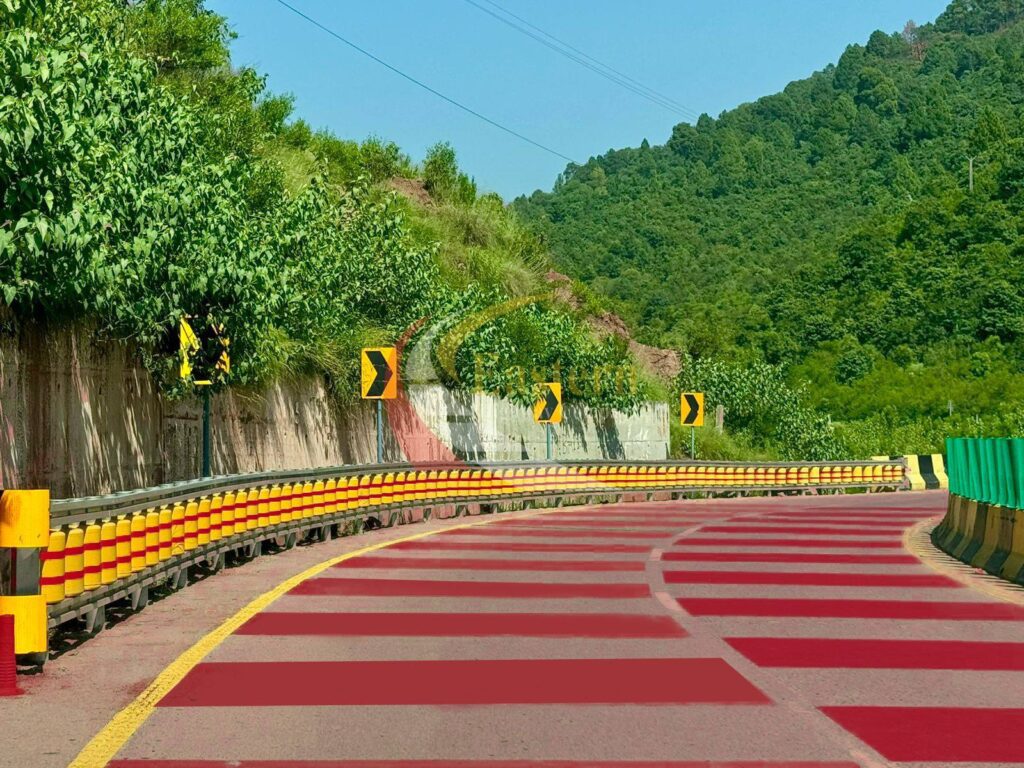
Roller barrier systems use rotating rollers within a steel barrier structure. When a vehicle strikes the barrier, the rollers rotate and help redirect the vehicle along the barrier.
Eastern Highway roller barrier guard rail system as one of its guard rail and fencing products. The company also describes roller barriers as suitable for locations such as sharp curves, slopes, medians, and other high-risk road sections where impact management is important.
The system includes rotating rollers, steel rails, vertical posts, and connecting components. These parts work together to manage impact and help guide an errant vehicle away from a dangerous area.
Chain Link Fencing
Galvanized chain link fencing serves a different purpose from vehicle restraint barriers. It can be used to control access and separate highways or sensitive areas from surrounding spaces. This fencing can be customized according to client requirements and specifications.
The choice of any type of barrier system should depend on the specific safety need. A proper site assessment helps determine which solution is appropriate for a particular highway or infrastructure project.
What Makes a Guard Rail System Effective?
Installing a guard rail is only one part of the process. Correct design and installation are equally important. A safety barrier works as a system. The rail, posts, connections, terminal, anchoring arrangement, and supporting ground all affect its performance. Several other factors also need attention wich are as follow:
- The barrier must be positioned to protect against the specific hazard without creating unnecessary roadside risk.
- The exposed end of a guard rail must have an appropriate terminal or end treatment. An untreated rail end can create serious impact hazards.
- The barrier should be installed according to the specifications of the selected system. Small changes in height, alignment, post spacing, or connections can affect performance. This is why installation should follow the approved design and manufacturer’s requirements.
- A barrier must function as a continuous system rather than facing loose connections, missing components, or poorly repaired sections.
- A guard rail can be damaged by vehicle impacts, weather, corrosion, construction work, or other roadside activity, so it has to be maintained, repaired, or replaced when required.
Guard Rails Are Not a Substitute for Safe Road Design
A common misconception is that installing a guard rail automatically makes a dangerous road safe. That is not the case. A guard rail is itself an object that a vehicle can hit. It should therefore be used when the expected risk from the roadside hazard is greater than the risk created by striking the barrier.
The first priority should be to create a forgiving roadside where practical. Removing unnecessary fixed objects, improving road geometry, maintaining pavement quality, and providing adequate visibility can reduce roadway-departure risks. Guard rails provide another layer of protection when hazards cannot be removed.
Guard Rails and Other Highway Safety Measures
Guard rails work best when combined with other road safety measures. Road markings help drivers maintain their lanes. Reflective road studs improve visibility at night. Warning signs alert drivers to curves and hazards. Delineators help show the road edge. Speed management can reduce the severity of a crash.
This integrated approach is important on Pakistani highways. A barrier cannot correct poor visibility or unsafe driving by itself.
The Importance of Guard Rails on Pakistani Highways
Pakistan’s road network includes motorways, national highways, mountain routes, urban expressways, bridges, and roads through difficult terrain. These different environments require different safety treatments.
A mountain road may need protection from steep slopes. A divided motorway may require consideration of median barriers. A bridge approach may require a properly connected roadside barrier system. The solution should always match the site.
Building Safer Highways With the Right Barrier System
Road safety does not depend on one product. It depends on how different engineering measures work together.
Guard rails have a specific role. They help shield road users from hazards when a vehicle leaves the travelled way. They can redirect vehicles and reduce the severity of some roadway-departure crashes.
The right system, however, must be selected for the site. Its design, terminal treatment, installation, and maintenance all matter.
For highway authorities, contractors, and project developers in Pakistan, choosing a reliable traffic safety partner can make a significant difference. Eastern Highway provides guard rail and fencing solutions alongside road markings, traffic signs, road studs, barriers, and other traffic safety products. Its experience includes major highway and infrastructure projects across Pakistan.
Looking for guard rail systems for a highway or infrastructure project? Contact Eastern Highway to discuss the safety requirements of your project and identify a suitable barrier solution.