





Pakistan’s roads are facing a changing set of demands. Growing traffic, rising temperatures, extreme rainfall, flooding, and increasing pressure on natural resources are making traditional approaches to road development harder to sustain over the long term.
Building a road today is no longer only about creating a strong surface for vehicles; it also means considering how efficiently resources are used, how long the infrastructure will last, and how well it can withstand environmental challenges. This is where sustainable road construction in Pakistan is becoming increasingly important.
Modern construction practices can help reduce material waste, conserve energy, improve road durability, and limit environmental impact without compromising safety or performance.
As Pakistan continues to invest in highways, motorways, and urban road networks, sustainable approaches can play an important role in shaping infrastructure that is prepared for future needs. Eastern Highway supports this wider goal through road marking and traffic engineering solutions.
The shift toward more sustainable infrastructure starts with looking at how roads are planned, constructed, maintained, and eventually rehabilitated. If you to know what does sustainable road construction actually involves and how it is different from conventional road development, read below.
Table of Contents
ToggleWhat Is Sustainable Road Construction?
Sustainable road construction is an approach to developing and maintaining roads while considering their environmental, economic, and social impact throughout their service life. It focuses on using materials and energy more efficiently. This, as a result reduce unnecessary waste, limits emissions, and creates infrastructure that can perform reliably for many years.
The concept goes beyond choosing environmentally friendly materials. It can influence decisions at every stage of a road project, including material sourcing, pavement design, construction methods, drainage, maintenance, rehabilitation, and eventual reuse of existing road materials. A well-planned sustainable road can therefore reduce the need for frequent reconstruction while making better use of available resources.
Durability is particularly important. A pavement that withstands traffic loads and local weather conditions for longer can reduce repeated construction activity and material consumption. Equipment use and maintenance disruption also go rare.
For Pakistan, this also means considering conditions such as extreme heat, heavy rainfall, flooding, and the specific requirements of different regions.
Why Is Sustainable Road Construction Important in Pakistan?
Pakistan’s road network has to support growing transportation demands while facing increasing pressure from climate and environmental conditions. Heavy rainfall, flooding, extreme temperatures, and other weather-related events can damage pavement, drainage systems, bridges, and roadside infrastructure.
At the same time, constructing and maintaining roads requires large quantities of aggregates, asphalt, cement, water, fuel, and other resources. Sustainable practices can help manage these demands more efficiently while maintaining the performance and safety expected from modern roads.
Climate Resilience
Climate resilience is one of the strongest reasons to adopt sustainable road construction in Pakistan. Flooding and intense rainfall can weaken pavement layers, wash away road shoulders, damage drainage structures, and disrupt transportation.
Designing roads with appropriate drainage, stronger pavement systems, erosion protection, and site-specific climate considerations can help reduce these risks and improve long-term reliability.
Read our friendly article to know the “impact of climate change on road infrastructure design”.
Efficient Use of Natural Resources
Road construction depends heavily on materials such as aggregates, asphalt, and other construction inputs. Using recycled pavement materials, reclaimed asphalt, and suitable alternative materials can reduce dependence on virgin resources. Better material planning can also limit waste generated during construction and rehabilitation.
Lower Environmental Impact
Construction equipment, material production, transportation, and repeated road repairs consume energy and generate emissions.
Sustainable methods can reduce this impact through practices such as energy-efficient construction, pavement recycling, optimized material transportation, and lower-temperature asphalt technologies where technically suitable.
Longer-Lasting Infrastructure
Sustainability also depends on how long a road can remain functional. Durable pavement, effective drainage, appropriate materials, and timely maintenance can extend service life and reduce the need for frequent reconstruction. Fewer major rehabilitation cycles can mean lower resource consumption, less construction waste, and reduced disruption for road users.
Better Value Over the Road’s Life
The initial construction cost is only one part of a road project. Maintenance, rehabilitation, repairs, material replacement, and traffic disruption can add substantially to the overall cost throughout a road’s service life.
Sustainable planning considers these long-term requirements and aims to achieve better performance and resource efficiency over time.
Sustainable construction does not mean compromising road quality or safety. Instead, it aims to achieve the required engineering performance while reducing the environmental burden associated with building and maintaining transportation infrastructure.
Achieving these benefits requires practical changes in how roads are designed, built, and maintained. Several construction and pavement technologies can help reduce resource consumption while maintaining the strength, safety, and performance required for Pakistan’s roads.
Eco-Friendly Practices for Sustainable Road Construction in Pakistan
Sustainable road construction becomes practical when environmental considerations are incorporated into everyday engineering and construction decisions. The right approach depends on factors such as traffic volume, pavement condition, climate, available materials, project specifications, and expected service life.
Several established practices can help reduce resource use and environmental impact while maintaining the performance required from roads in Pakistan.
1. Reusing Existing Pavement Materials
Recycling existing pavement can reduce the need for newly extracted construction materials. Reclaimed asphalt pavement (RAP), for example, can be processed and incorporated into new asphalt mixtures when its quality and properties meet the requirements of the proposed application.
Pavement recycling can also reduce the amount of old road material sent to disposal sites and lower the demand for virgin aggregates and asphalt binder. Depending on the pavement condition and project requirements, recycling techniques may be considered during road rehabilitation instead of completely removing and replacing existing pavement.
2. Using Warm Mix Asphalt
Warm Mix Asphalt (WMA) is produced and placed at lower temperatures than conventional hot-mix asphalt. Lower production temperatures can reduce energy consumption during asphalt manufacturing and may also decrease emissions and fumes at the construction site.
WMA can be considered where its use is compatible with the project specification, climate, materials, and required pavement performance. Its potential energy savings make it an important technology for projects looking to reduce the environmental impact of asphalt production.
3. Choosing Recycled and Alternative Materials
Suitable recycled materials can reduce reliance on virgin resources when they meet engineering and safety requirements. Recycled aggregates, reclaimed asphalt, processed construction materials, and certain alternative additives can have applications in road construction and rehabilitation.
Pakistan has also seen practical experimentation with recycled plastic in asphalt. In Karachi, a road project reported by Shell Pakistan incorporated more than 2.5 tonnes of discarded plastic lubricant bottles into asphalt using the dry process. Such applications demonstrate the potential for converting certain waste materials into useful construction inputs, although their suitability must be established through proper testing and mix design.
4. Improving Construction Material Efficiency
Material waste can increase the environmental footprint of a road project. Accurate quantity estimation, appropriate storage, controlled application, quality testing, and careful project planning can help reduce unnecessary material consumption.
Efficient material transportation also matters. Sourcing suitable materials closer to the project site, where practical and where quality requirements allow, can reduce transportation distances, fuel consumption, and associated emissions.
5. Using Energy-Efficient Construction Equipment
Road construction requires heavy machinery for activities such as excavation, grading, paving, compaction, and material application. Efficient equipment, proper maintenance, accurate calibration, and effective project scheduling can help reduce unnecessary fuel consumption and material wastage.
Equipment should also be operated according to manufacturer and project requirements. Avoiding unnecessary idling, maintaining machinery properly, and coordinating equipment movement can improve operational efficiency without affecting construction quality.
6. Designing Effective Road Drainage
A sustainable road must be able to manage water effectively. Poor drainage can allow water to enter pavement layers, weaken the road structure, cause erosion, and accelerate deterioration.
Road projects should therefore consider appropriate crossfall, side drains, culverts, outlets, erosion protection, and other drainage measures according to local site conditions. Flood-prone areas may require additional assessment and climate-resilient design measures. Effective drainage can protect the pavement and reduce the frequency of costly repairs and reconstruction.
7. Designing for Longer Service Life
A road that requires major repairs shortly after construction can consume more materials, energy, and resources over its lifetime. Sustainable design therefore places strong emphasis on durability.
Engineers can consider traffic loading, local climate, soil conditions, pavement materials, drainage, construction quality, and expected service life when developing pavement designs. Regular inspections and timely maintenance can then address deterioration before minor defects develop into major structural problems.
8. Reducing Construction Waste
Waste reduction should begin before construction starts. Project teams can identify opportunities to reuse excavated materials, recycle suitable pavement components, accurately estimate material quantities, and separate different waste streams.
Proper waste management can reduce the amount of construction material sent to disposal facilities while helping contractors recover materials that may still have practical value.
9. Using Durable Road Markings and Safety Infrastructure
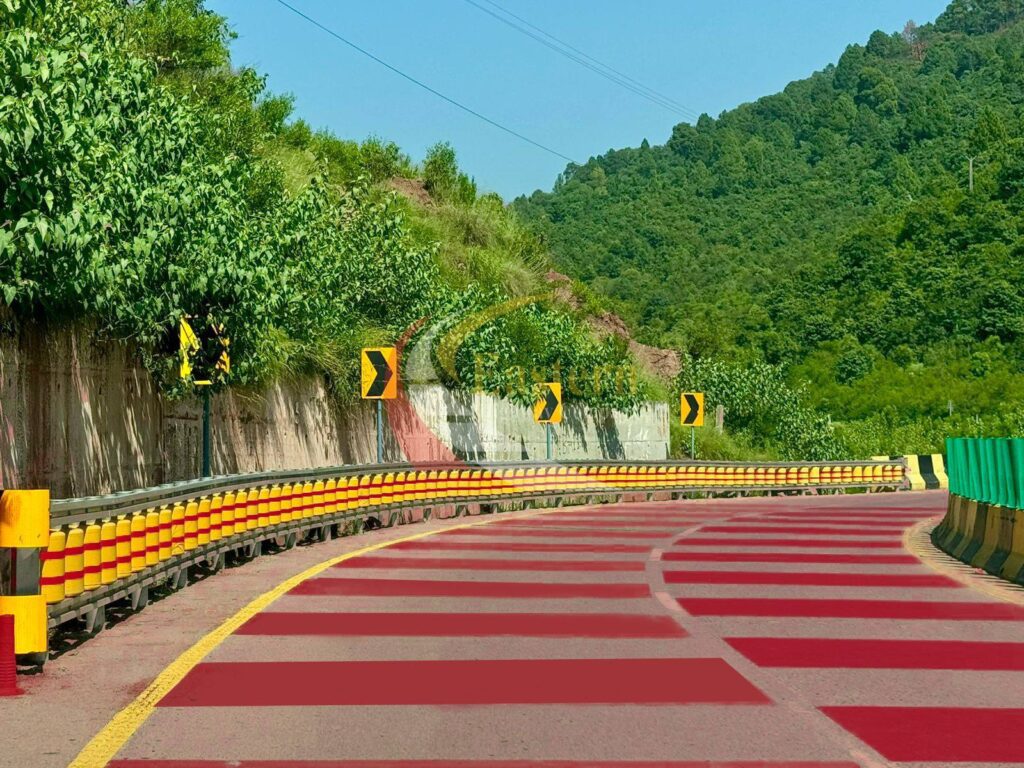
Sustainability also extends beyond the pavement itself. Durable road markings, reflective road studs, traffic signs, and other safety infrastructure contribute to the long-term performance of a road network.
High-quality markings that remain visible for longer can reduce the need for frequent reapplication and associated material and equipment use. At the same time, clear markings and traffic control systems improve road visibility and help support safer movement for drivers and other road users.
For well known company such as Eastern Highway, which provides road marking and traffic engineering solutions in Pakistan, these elements form an important part of creating road infrastructure that is both safe and functional over the long term.
These practices can reduce resource consumption during construction, but sustainability does not end when a road is opened to traffic. In Pakistan, the ability of infrastructure to withstand flooding, extreme heat, heavy rainfall, and other environmental stresses is equally important to its long-term performance.
How Sustainable Road Construction Reduces Long-Term Costs
The financial value of sustainable road construction becomes clearer when the entire life of a road is considered rather than only its initial construction cost. A road that is designed for durability, uses materials efficiently, and receives timely maintenance can reduce the frequency and scale of future rehabilitation.
Reduced Material Consumption
Recycling existing pavement and using suitable reclaimed or recycled materials can reduce the need for newly extracted aggregates and other construction inputs. This can help control material requirements while also reducing the costs and environmental impact associated with extraction, processing, and transportation.
Fewer Major Repairs
Durable pavement and effective drainage can help prevent minor defects from developing into serious structural problems. Addressing deterioration early can reduce the need for extensive reconstruction later, particularly in areas exposed to heavy traffic, flooding, or extreme weather.
Lower Energy and Fuel Use
Practices such as warm mix asphalt and efficient construction operations can reduce energy requirements during certain stages of road development. Better equipment management and project planning can also limit unnecessary fuel consumption, equipment movement, and operational downtime.
Reduced Maintenance Disruption
Frequent road repairs do not only create direct maintenance expenses. They can also cause traffic delays, restrict access to businesses and communities, and increase vehicle operating costs. Roads that remain functional for longer periods can reduce the frequency of major interventions and the disruption associated with them.
Better Lifecycle Value
Sustainable road construction considers how a road will perform throughout its service life. A project that may require a higher investment in quality materials, drainage, pavement design, or construction controls can provide better long-term value if those decisions extend service life and reduce future maintenance requirements. The goal is therefore not simply to build a road at the lowest initial cost, but to achieve reliable performance with efficient use of resources over time.
Challenges & Future of Sustainable Road Construction in Pakistan
Sustainable road construction offers significant opportunities, but its wider adoption in Pakistan also faces practical challenges. The transition is facing the the following challenges:
- Limited Availability of Suitable Recycled Materials
- Need for Technical Expertise
- Reliable quality control, appropriate project planning
- Upfront Investment in modern construction methods
- Climate and Regional Differences
- Project specification consideration
What the Future Could Look Like?
The future of sustainable road construction in Pakistan is likely to involve greater use of pavement recycling, resource-efficient materials, climate-resilient designs, improved drainage, digital project planning, and more efficient construction equipment. Better maintenance planning can also help authorities preserve existing roads for longer instead of relying mainly on major reconstruction.
Also Read our Comprehensive Blog on “Pavement Lifecycle Cost & its Importance in Pakistan”
Government agencies, engineers, contractors, material suppliers, and road safety companies all have a role to play in this transition. Stronger technical standards, better material testing, investment in modern equipment, and greater awareness of lifecycle costs can help make sustainable practices more practical and scalable
As Pakistan continues to expand and upgrade its transportation infrastructure, sustainability will increasingly need to be considered alongside durability, safety, cost, and climate resilience. The objective is not simply to build roads using fewer resources, but to create infrastructure that performs reliably, remains maintainable, and provides value throughout its service lif
Sustainable road construction therefore represents a long-term approach to infrastructure development, where environmental responsibility works alongside durability, safety, and economic value. For Pakistan, adopting these principles can help create road networks that are better prepared for future transportation and climate challenges.
Final Words
Sustainable road construction in Pakistan is becoming an important part of building infrastructure that can meet future transportation and environmental demands. Efficient use of sustainable practices can reduce resource consumption while improving long-term road performance.
The benefits also extend beyond environmental protection, as roads that require fewer major repairs can provide better lifecycle value and reduce disruption for communities and road users. Achieving these outcomes requires the right combination of engineering expertise, quality materials, appropriate technology, and regular maintenance.
As Pakistan continues to develop its highways, motorways, and urban road networks, sustainable construction practices can help create safer, more durable, and resource-efficient infrastructure for the years ahead.
Frequently Asked Questions
What materials are commonly used in sustainable road construction?
Sustainable road projects can use conventional materials more efficiently as well as suitable recycled and alternative materials. Material selection depends on engineering requirements, availability, testing, and project specifications.
Can sustainable road construction be used for highways and motorways?
Yes. Sustainable construction principles can be applied to highways, motorways, urban roads, rural roads, and other transportation infrastructure.
What role does road maintenance play in sustainability?
Regular maintenance preserves existing infrastructure and can prevent small defects from becoming major pavement failures. Extending the useful life of an existing road can reduce the materials, energy, equipment, and waste associated with major reconstruction.
What is the difference between sustainable road construction and green road construction?
The terms are often used in similar contexts, but sustainable road construction has a broader focus. It considers environmental impact along with economic value, durability, safety, resource efficiency, maintenance, and long-term performance. Green construction generally places greater emphasis on reducing environmental impact.