



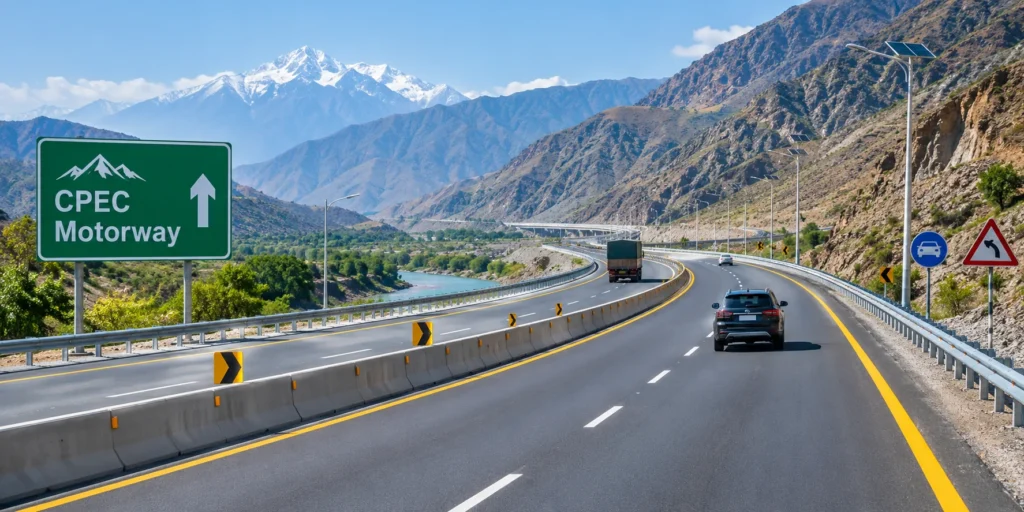
Pakistan’s motorway network is changing the ways people travel and goods move between major cities. The China-Pakistan Economic Corridor (CPEC) supports this progress through transport infrastructure that connects important regions and trade routes. However, building a road is only one part of the job. Drivers also need clear road markings, visible traffic signs, and suitable safety features to travel with confidence.
CPEC motorway road safety standards are an important part of this discussion. On major routes, traffic engineering measures help drivers understand lane layouts, recognise hazards, and respond to changing road conditions. These features do not prevent every accident, but they support safer road use when they are properly designed, installed, and maintained.
For Pakistan, the challenge is to develop road infrastructure that supports efficient travel while addressing the safety needs of drivers, passengers, and road workers.
Table of Contents
ToggleHow CPEC Motorway Projects Support Road Safety
CPEC includes major road projects that improve connections across Pakistan. The Havelian–Thakot section of the Karakoram Highway Phase II project is one example. According to the official CPEC project details, the 120-kilometre project comprises 40 kilometres of four-lane motorway and 80 kilometres of Class-II highway.
This distinction is important because the route does not consist entirely of motorway. Different road types require safety measures that suit their design, traffic conditions, and surrounding environment.
On high-speed roads, drivers need clear visual guidance and enough time to react to hazards. Road markings help define lanes, traffic signs communicate instructions, and reflective devices improve visibility at night. Suitable roadside safety systems also help manage risks at locations where vehicles may leave the carriageway.
These measures work together. A well-designed road still needs clear signs and markings, while safety equipment requires proper installation and regular maintenance to remain effective.
5 Road Safety Measures That Matter on CPEC Routes
Several road safety features work together to support safer travel on CPEC routes. Each serves a different purpose, from helping drivers maintain their lanes to improving visibility at night and protecting road users near roadside hazards. The following measures explain how these features contribute to safer road conditions in Pakistan.
1. Road Markings Help Drivers Maintain Lane Discipline
Road markings provide essential guidance on motorways and highways. Lane lines show drivers where to position their vehicles, while edge lines help identify the boundaries of the carriageway. Directional arrows guide motorists at selected locations and make the intended direction of travel clearer.
These markings are particularly useful at night and on unfamiliar routes. Clear lines help drivers recognise the road layout without relying only on roadside signs.
Thermoplastic road marking material is commonly used for highway applications because it can provide durable markings when the material and application method suit the road conditions. Its performance depends on factors such as surface preparation, application thickness, traffic volume, and maintenance.
Raised-profile markings can also provide an audible or tactile warning when a vehicle crosses them. Their use depends on the location and the purpose of the marking.
For these benefits to continue, markings need to remain visible and correctly applied. Worn or poorly maintained lines can make lane boundaries harder to recognise, particularly in low-light conditions.
2. Reflective Road Studs Improve Night-Time Visibility
Road markings are not the only features that help drivers follow a route after dark. Reflective road studs, often called cat’s eyes, provide additional visual guidance by reflecting light from vehicle headlights.
These devices can help drivers identify lane divisions, road edges, and changes in alignment. Their visibility is especially useful on long routes where drivers may travel for extended periods at night.
However, road studs work alongside other safety features rather than replacing them. Their placement, spacing, reflective performance, and condition all affect how well they guide motorists.
Regular inspections help identify damaged or missing studs. Replacing defective units and maintaining clear pavement markings can help preserve the visual guidance drivers need.
3. Traffic Signs Give Drivers Time to Make Decisions
Drivers need reliable information before they reach a junction, curve, exit, or restricted area. Traffic signs provide this information through speed limits, warning symbols, directional boards, and destination names.
On major routes, signs should be easy to read and visible from an appropriate distance. Their placement needs to give drivers enough time to understand the message and respond without sudden braking or unsafe lane changes.
Reflective sheeting helps signs remain visible when illuminated by vehicle headlights. The appropriate material depends on the sign’s purpose, location, and project specifications.
Consistent sign design also makes navigation easier. Drivers who recognise familiar symbols and clear instructions can better understand what the road requires, even when travelling through an unfamiliar part of Pakistan.
4. Safety Barriers Help Manage Roadside Hazards
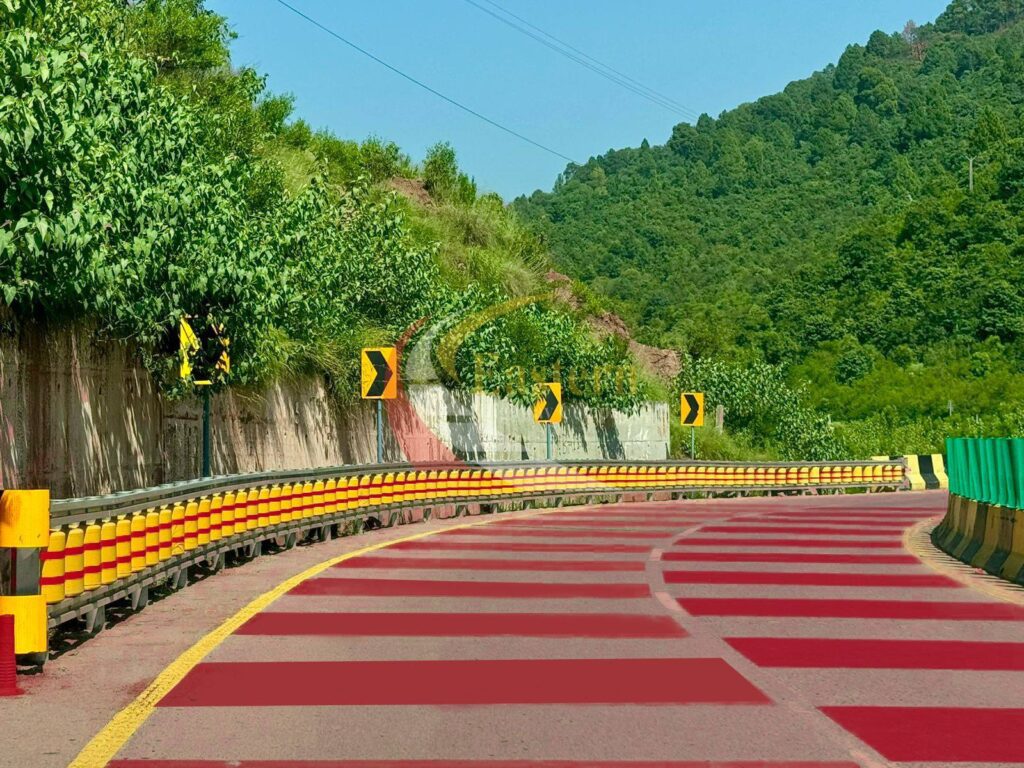
Clear markings and signs help drivers stay on the intended path, but roadside protection is also important. Some road sections have steep slopes, fixed objects, or other hazards that can increase the consequences of a vehicle leaving the carriageway.
Guardrails and other roadside safety barriers can help redirect vehicles away from selected hazards when they are correctly designed and installed. Crash cushions serve a different purpose. They are designed to absorb impact energy at suitable locations, such as the approaches to certain barriers or fixed objects.
The choice of equipment depends on the roadside conditions, available space, design requirements, and expected impact conditions. Correct installation and anchoring are essential to its performance.
These systems also need inspection and repair. A damaged barrier may not provide its intended protection, so maintenance teams must assess it after a collision and during routine checks.
5. Work-Zone Safety Protects Drivers and Road Workers
Road safety does not end when construction is complete. Motorways need repairs, resurfacing, road marking, and other maintenance work throughout their service life. These activities can create risks when moving traffic passes close to workers and machinery.
Temporary warning signs, cones, barriers, and diversion markings help guide drivers through work areas. Advance warnings are especially important on high-speed roads because motorists need enough distance to slow down or change lanes safely.
Work-zone equipment must remain visible and correctly positioned throughout the activity. Contractors also need suitable traffic management arrangements that separate workers from moving vehicles as far as practical.
Good planning reduces confusion around temporary lane closures and helps both road users and workers understand how traffic should move through the area.
Why Road Safety Maintenance Matters in Pakistan
Installing safety equipment is only the first step. Markings fade under traffic and weather exposure. Reflective studs can become damaged, while signs may lose visibility because of dirt, wear, or environmental conditions.
Pakistan’s varied climate makes regular inspections important. Heat, rain, dust, and fog can affect road surfaces and visibility in different regions. Maintenance schedules and material choices should account for these conditions.
Inspection teams need to check road markings, traffic signs, reflective devices, and roadside safety equipment. Damaged components should be repaired or replaced according to the relevant specifications.
Material quality also matters. Products must suit the road environment, expected traffic, and required performance. Choosing suitable equipment and installing it correctly can help maintain consistent safety conditions over time.
What These Developments Mean for Pakistan’s Roads
CPEC transport projects create opportunities to strengthen Pakistan’s road network. However, safer travel depends on more than construction quality. Road authorities, contractors, maintenance teams, and motorists all have responsibilities.
Infrastructure teams must provide suitable safety features and maintain them properly. Drivers must follow speed limits, keep safe distances, avoid distractions, and obey traffic instructions.
Road safety measures can support better driving conditions, but they cannot replace responsible behaviour or effective enforcement. Their value comes from a coordinated approach that considers road design, visibility, roadside hazards, maintenance, and driver awareness.
This approach is important across Pakistan’s transport network, where roads serve private motorists, public transport, commercial vehicles, and long-distance freight traffic.
Building Safer Roads Through Better Traffic Engineering
CPEC motorway projects highlight the role of traffic engineering in Pakistan’s transport development. Clear road markings, reflective studs, visible traffic signs, suitable barriers, and properly managed work zones help guide road users and address specific hazards.
At Eastern Highway, we work on traffic engineering and road safety solutions for Pakistani road projects. Our completed projects include work on the Hazara Motorway (Havelian–Thakot) and the Multan–Sukkur Motorway, with services and equipment covering road markings, signs, reflective devices, and related safety systems.
You can explore our road marking services, review our completed road safety projects, or see examples of our work in the road safety project gallery.
The long-term goal is to build and maintain roads that provide clear guidance, address roadside hazards, and support responsible driving. Continued attention to engineering quality, suitable materials, regular maintenance, and driver awareness can help Pakistan develop a safer and more reliable road network.
FAQs
What is the role of CPEC in Pakistan’s motorway development?
CPEC supports transport infrastructure development in Pakistan through major road projects that improve connectivity between regions, cities, and trade routes. These projects also create opportunities to incorporate suitable traffic guidance and roadside safety measures.
How do road markings help prevent confusion on motorways?
Road markings show lane boundaries, road edges, and permitted directions of travel. Clear markings help drivers maintain their position and understand the road layout, particularly at night or on unfamiliar routes.
Do road safety features alone guarantee accident-free motorways?
No. Road markings, traffic signs, reflective devices, and safety barriers help manage specific road risks, but they cannot eliminate every hazard. Safe motorway travel also depends on responsible driving, appropriate speed, vehicle condition, road maintenance, and effective traffic enforcement.